Oil sands

In Situ

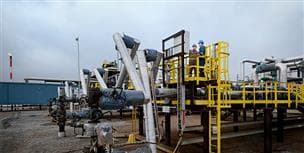
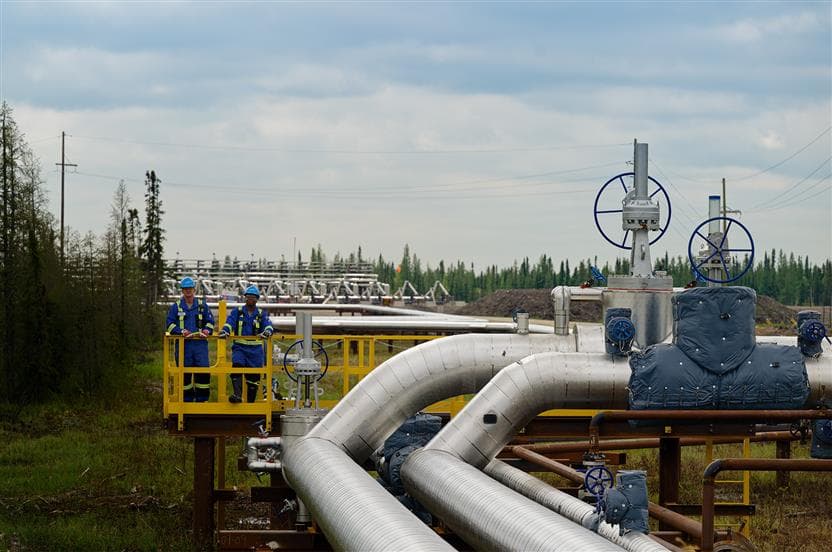
Two workers stand on a platform at Suncor's Firebag site, overlooking pipelines, valves and processing equipment. Additional piping infrastructure, boreal forest and a cloudy blue sky are visible in the background.

In situ at a glance

80%

Of Canada’s oil sands lie within areas suitable for in situ development.

53%

Of Alberta’s bitumen production comes from in situ operations.

75%

Of Alberta’s in situ production comes from SAGD operations.


Approximately 80% of Canada’s oil sands are too deep to mine using the truck and shovel technique and must be tapped using in situ production, a three-part process to drill, inject steam and extract bitumen to the surface.

Over decades, Suncor has continuously improved how these operations are designed and operated, helping enhance reliability, improve efficiency and optimize resource recovery.

These operations are an important part of our long-term future. In situ technology allows us to support long-term production and maximize the value of existing resources.
In situ will play an increasingly important role in what comes next for Suncor. Learn more about the future of our in situ operations.


Our in situ operations

Proposed projects

The steam-assisted gravity drainage process (SAGD)

Most of Suncor's in situ production relies on Steam-Assisted Gravity Drainage (SAGD), a technology used to recover bitumen located too deep underground for mining. By injecting steam into the reservoir, the bitumen is heated so it can flow to a lower well and be brought to the surface for processing.
In situ diagram

Number 1

The top horizontal well reaches the oil sands ore and injects steam to heat the reservoir.

Number 2

The bitumen is separated by the heat, so, using gravity, it can flow as a liquid into the lower well.

Number 3

The bitumen travels along the lower well where it is collected and piped to upgrading facilities.