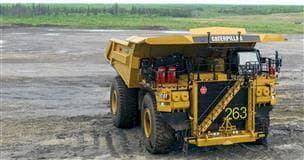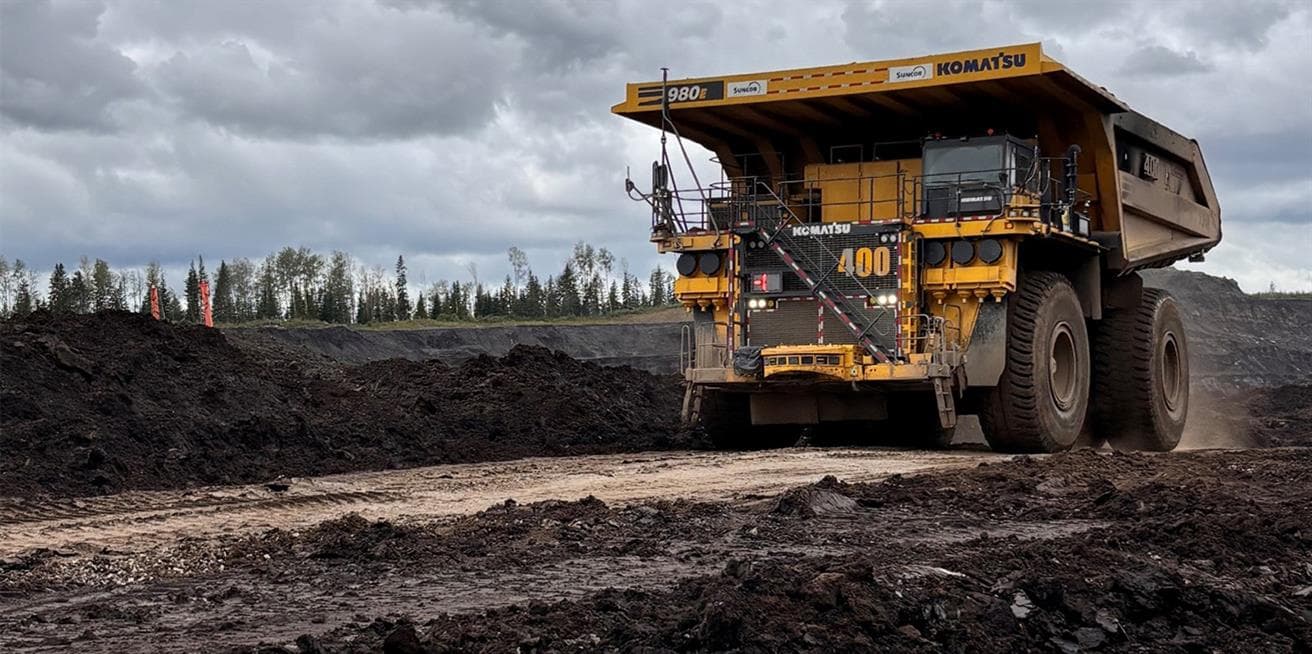
- Mud Mode is helping Suncor’s Autonomous Haulage System at Base Plant keep trucks moving in some of the wettest conditions in decades.
- Since launching in spring 2025, Mud Mode 1.0 improved slippage-related stoppages and enabled approximately six million additional tonnes moved.
- Mud Mode 2.0, launched in spring 2026, has improved performance by 40% over version 1.0 and has now been deployed across 90% of the fleet, with full rollout in the third quarter.
You may have heard the term ‘mud mode’ on Suncor’s second quarter earnings call. So, we’re digging into what it is, how it works and why it’s gaining traction. Like many good ideas, Mud Mode started in an unexpected place: an observation by someone determined to solve a practical problem.
For Mike G., Director Operations - AHS Deployment, Base Plant, the spark came from a familiar source: the drive mode in his own vehicle.
“Just like my vehicle has different settings to help it handle snow, mud or rough terrain, I knew there had to be a way to use the data in our AHS system to do something similar at a larger scale on our haul trucks.”
At Base Plant, home to the world’s largest ultra-class autonomous haul truck fleet at a single mining site, the concept had the potential to solve a real challenge. Soft ground and wet weather can affect traction, leading to truck stoppages and field interventions.
Mud Mode helps AHS trucks better respond to those conditions.
Using data already generated by AHS and truck drive systems, the technology allows haul trucks to maintain better traction and avoid unnecessary stops. The solution combines data, testing and real-world experience to keep trucks moving safely and efficiently.
Implemented in spring 2025, Mud Mode 1.0 focused on slippage during forward travel.
The results were impressive. Slippage-related stoppages improved significantly and enabled the movement of approximately six million additional tonnes, generating an estimated $25 million in value.
The team built on that early success through continued testing, learning and refinement, leading to the launch of Mud Mode 2.0 in spring 2026. The enhanced version operates at higher speeds and in reverse, including when trucks are backing up to a shovel or dump, and gives trucks more time to regain traction before stopping in slippery conditions.
The timing couldn’t have been better. With snow and rainfall this spring reaching levels not seen in decades, Mud Mode 2.0 was put to the test – and delivered.
Since testing began in early May, performance has improved by 40% over Mud Mode 1.0 across a range of weather conditions, demonstrating the benefit of continuous improvement. Mud Mode 2.0 has been rolled out in 90% of the fleet, with completion on track in the third quarter.
When the going gets muddy, it turns out a good idea can go a long way.