Syncrude Mildred Lake Extension

A nighttime shot of a CAT 6040 lit up at the Syncrude MLX – West site.

Syncrude Mildred Lake Extension at a glance

2025

First oil from Mildred Lake Extension (MLX) - West project.

Contact us

Contact Indigenous & Community Relations – Wood Buffalo
Call: 1-855-600-5561
Email: [email protected]

Overview: Oil sands mining development

The Syncrude Mildred Lake Extension (MLX) project will provide a replacement supply of bitumen for upgrading when the current North Mine approaches the end of its oil sands deposit. It is designed to allow Syncrude to sustain its current production capacity.

The project consists of two mine sites:

  • MLX West, which began production in 2025, is located northwest of the current North Mine and northeast of our MacKay River in situ asset; and,
  • MLX East is located on the east side of the Mildred Lake Settling Basin.

Proposed timeline

The Mildred Lake Extension project (MLX) received regulatory approval in 2019 and additional approvals in 2020. MLX-West was put on hold in 2020 due to the COVID-19 pandemic; construction activities were restarted in 2021, and first oil was achieved in April 2025. The MLX-East program is expected to follow the MLX-W development if economic conditions remain suitable.

The MLX West mine site will be approximately 6 km wide and 10 km long, and MLX East mine site will be approximately 3 km wide and 8 km long.

Public consultation

Syncrude publicly disclosed its intention to file an application two full years in advance. This was in response to feedback from local Indigenous communities who indicated they wanted to be engaged in the process as early as possible and to have the opportunity to understand the project before the application was filed.

Syncrude provided opportunities for local Indigenous communities to provide input into the draft terms of reference for the environmental assessment. Syncrude also sought proposals to carry out Traditional Land Use studies prior to submitting the application.

Once the Alberta government approved the consultation plan in January 2013, a broad-ranging consultation was launched with local Indigenous communities and other stakeholders. Because of those efforts, agreements were reached with four First Nations and two Métis Locals.

Public notifications

Responsibility to Indigenous communities

We are committed to communicating directly and openly with Indigenous communities to identify and address questions and concerns.

We continue to engage and consult with Indigenous communities throughout the life of the project. Future engagement activities will vary depending on the nature and extent of community impacts and how individual communities want to be engaged. Engagement may include open houses, on-the-land workshops, community meetings and technical meetings.

We will seek to identify specific impacts to economic, social and health conditions and ensure that they are incorporated into ongoing assessment work and planning for the project.

Learn about our commitment to building mutual trust and respect with Indigenous Peoples.

Environmental stewardship

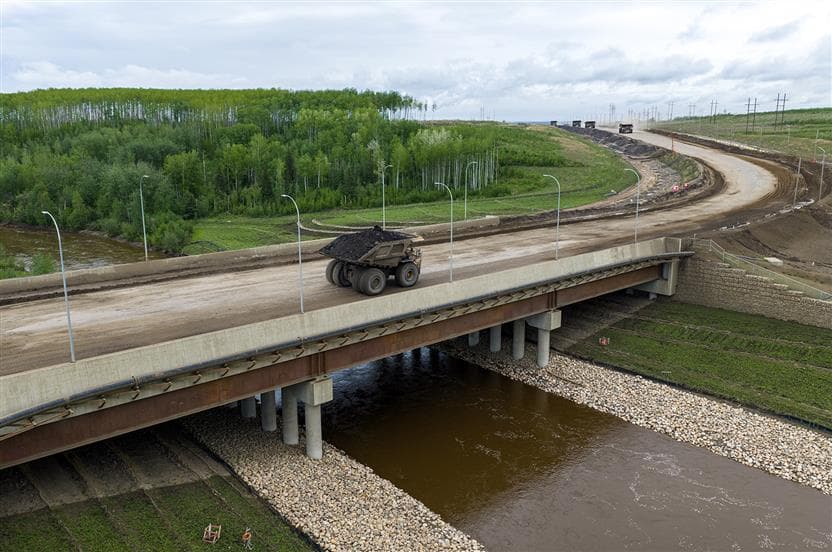
Four researchers standing by the river at Wapisiw lookout. They are wearing safety glasses, blue hard hats, gloves and safety vests. There is a bridge over the river in the background. One of them is holding a tablet.

The MLX project was designed to minimize operational effects on the environment and wildlife. A 100-metre setback from the top of the escarpment will be maintained along both the MacKay and Athabasca rivers, with available corridor and riparian areas between 600 metres to 2.5 kilometres wide.

MLX will use existing extraction and upgrading facilities so no new infrastructure or tailings ponds will be required to support MLX.

Community benefits

We work with governments, industry and community groups to develop coordinated, long-term approaches to address social and economic effects of oil sands development.

Our investment in the project will benefit nearby communities, Alberta, and Canada through:

  • employment opportunities
  • promotion of economic growth and business development
  • continued use of existing oil sands processing facilities
  • creating value from Canada’s oil sands resources
  • valuable revenues for governments
  • education and training
  • community investment